
2025 Volkswagen Tiguan review: Made for the catwalk

Updated: Jan 15
Extremely good looks are ready for the TikTok generation

2025 Volkswagen Tiguan review by The Road Beat
Words and pictures: Mitchell Weitzman
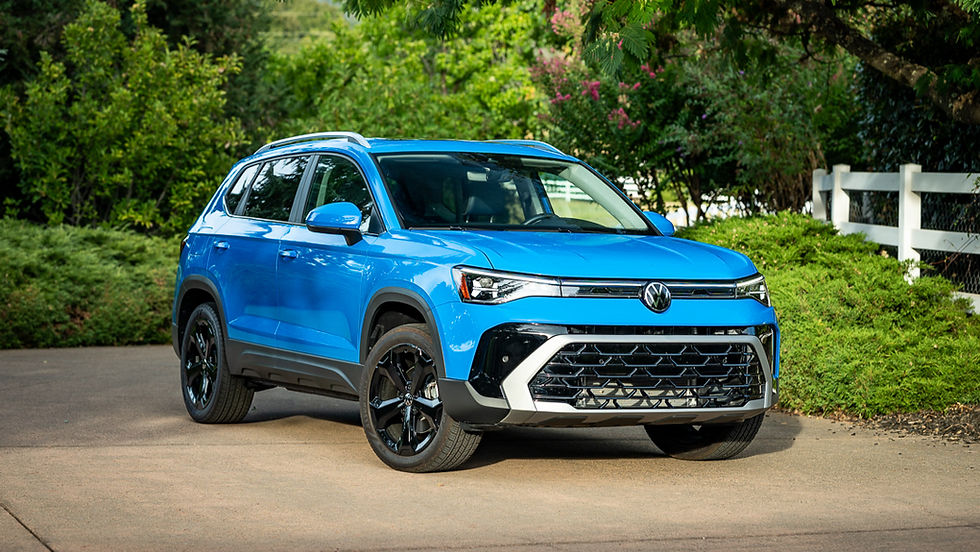
TikTok has a pronounced effect on contemporary consumerism. Favoring aesthetics before substance, it won’t be long before endless clips of the new Volkswagen Tiguan flood feeds, buoyed by its genuinely striking looks. And on that front, the Tiguan will win plenty of hearts. But those quick-hit videos and surface-level 'reviews' won’t show the troubling details that undermine the exceptional efforts of the exterior styling.
Picks
Mazda has long worn the crown for the most attractive crossover in this fiercely competitive segment, but Volkswagen has stormed in and seized its throne. The previous Tiguan was already a good-looking vehicle, but the new lines breathe a subtle upscale nuance — especially up front — making this attainable crossover look far more expensive than it actually is. In fact, it now looks more like an Audi than most Audis do. Honestly, better than an Audi.
Open the door for the first time and the reaction mirrors the exterior — overwhelmingly positive. Volkswagen’s brown interior option deserves praise as well, looking rich and intentional rather than dingy or dirty, something brown interiors often suffer from in vehicles like the RAV4 or GMC Terrain. The sweeping, oversized screen immediately grabs attention, and the Tiguan’s traditional strength of interior space continues. Rear-seat legroom is generous, and while previous Tiguans offered an optional third row that was nearly useless, its omission here is no loss at all.

Unlike other Volkswagen crossovers that suffer from overly light, numb steering, the Tiguan finally delivers some weight and substance behind the wheel. While ultimate tactility is still lacking, steering accuracy and response are excellent for the class, giving the Tiguan a genuinely capable, almost sporty feel — something most rivals (Mazda’s CX-5 and CX-50 aside) simply don’t offer. Sharing its platform roots with the Golf certainly helps, and while many mainstream VWs and other crossovers feel dull and detached, the Tiguan has a welcome edge on Northern California’s twisty foothill roads.
With all-wheel drive eliminating torque steer and power levels that don’t overwhelm the tires, the Tiguan’s chassis feels constantly planted and composed especially when leaving corners under power. Balance is impressive for a roomy mover of persons, and while it’s not outright fun in the traditional sense nor genuinely rewarding to drive briskly, its stout front axle and body control are solid, giving a confidence when pushed.

Power comes from Volkswagen’s familiar turbocharged 2.0-liter four-cylinder, producing just over 200 horsepower. It’s not an exciting or even quick unit, but it is at least smooth under operation and sounds better than its Japanese contemporaries. Acceleration is barely adequate rather than exciting, with 0–60 mph arriving in the mid-eight-second range. Fuel economy hovered around 25–26 mpg combined over a week of commuting and errands. The good news is the 2026 model year will see a big upgrade to 268-horsepower.
Price is competitive for this top SEL R-Line example, ringing the register at $41,180 all-in as-tested.
Nicks
Unfortunately, many of the Tiguan’s biggest disappointments are things those TikTok and YouTube shorts will never show. While the cabin initially impresses, that feeling fades quickly once you start living with it. The colors and materials may impress at first glance, but the design lacks cohesion. That massive screen, for example, is poorly integrated into the dashboard, appearing as a standalone slab awkwardly mounted on top. The bulky support structure on the passenger side for said screen only reinforces the sense that the interior was finished first, and the screen was added later as an afterthought.
While this cabin is a step forward from recent Volkswagens, the appeal is surface level as the interior quickly reveals itself to be fussy and incoherent. Wood trim options only make matters worse, looking cheap and out of place — more Temu than premium — and clashing with the rest of the design language.

Then there’s the center console armrest, which remains one of the worst in the industry. It creaks loudly due to its notched adjustment mechanism, and you must open it fully just to close it again. Try to grab something quickly and close it from partway up? Too bad — it won’t. What would be a great idea is to use the latch as a clutch so you can you raise and lower it at your behest and without the awful creaking noise, but they didn't try hard enough. The idea of an adjustable armrest makes sense, but the execution is awful. In a new vehicle and the top Tiguan of the year, the cheap noises and clunky operation are unacceptable.
Controls elsewhere don’t fare much better. The capacitive sliders for volume and temperature beneath the screen are frustrating, requiring repeated swipes instead of allowing you to hold your finger for quick adjustments. To make matters worse, there are also digital climate controls buried inside of menus on the screen itself. The result is two different temperature controls located mere centimeters apart, neither of which work particularly well; Physical knobs would solve all of this instantly. Adding insult to injury, the rearview camera resolution is poor by modern standards.
Material quality further disappoints once you start wholly interacting with the cabin, with many surfaces feel hollow and cheap. Even the turn signal stalks, while visually clean, are overly smooth and slippery, making it easy to accidentally trigger the windshield washers when signaling or using the high beams. The steering wheel is overloaded with buttons as well — a far cry from when cars had just a few, or none at all.

Passenger space is competitive, but cargo room is not. With just 27 cubic feet behind the rear seats, the Tiguan massively trails key rivals like the Toyota RAV4 and Honda CR-V which offer nearly 40 cubes of storage. That number is also a massive reduction compared to the 2024 version, so if maximizing trips to Costco matters to you, this isn’t the vehicle to buy. And for those who actually used the Tiguan’s old third row, Hyundai’s Santa Fe now fills that niche at a mostly similar if slightly higher price point, offering more usable space and strong styling of its own.
Volkswagen clearly chased glitz and glamour here, but quality and usability took a back seat. Yes, this is still an affordable vehicle by segment standards, and compromises are inevitable. But these feel like the wrong compromises.

2026 solves the lethargic acceleration, but Volkswagen also continues to not offer any hybrid option, something Mazda now does along with typical stalwarts like the CR-V Hybrid and RAV4 (now only hybrid for the 2026 model year).
A tough spot to be in
Volkswagen has created the visual leader of the segment, and the Tiguan’s driving dynamics are beat most rivals. The upgraded engine next year will also add the much-needed spice to the grunt department. I genuinely enjoyed driving it day to day during my test, but enjoyment on the move actually driving doesn’t outweigh the daily frustrations inside when interacting with the cabin.
Not everyone will be as sensitive to tactile quality and control logic as I am, but these issues add up quickly to me when other brands are just easier to use. There are simply nicer, more intuitive, and more spacious vehicles available to choose from. This is the best Tiguan yet, with real improvements (and more to come) and clear strengths — but once again, it’s the little things that hold another Volkswagen back.
More photos from the 2025 Volkswagen Tiguan review


dashboard of 2025 VW Tiguan
2025 Volkswagen Tiguan SEL R-Line 4Motion main specifications
Price as-tested: $41,180
Powertrain
Engine: 2.0-liter turbocharged inline-4
Horsepower: 201 hp
Torque: 221 lb-ft
Transmission: 8-speed automatic
Drivetrain: All-wheel drive (4MOTION)
Performance
0–60 mph: ~8.5 seconds
Towing capacity: 1,800 lbs
Fuel Economy
EPA combined: 25 mpg
EPA city / highway: 22 / 30 mpg
Fuel tank capacity: 15.6 gallons
Dimensions
Length: 185 in
Wheelbase: 110 in
Width: 73 in
Height: 67 in
Ground clearance: 7 in
Curb weight: ~3,900 lbs
Interior & Cargo
Seating capacity: 5 passengers
Cargo volume (rear seats up): 27 cu ft
Cargo volume (rear seats folded): 59 cu ft
Chassis
Front suspension: Independent strut
Rear suspension: Multi-link
Brakes: Four-wheel disc (vented front)
Wheels & Tires
Wheel size: 20-inch alloy
Tire size: 255/40R20 all-season
Standard / Key Features (SEL R-Line)
Large touchscreen infotainment display
Wireless Apple CarPlay & Android Auto
Digital instrument cluster
IQ.DRIVE driver-assistance suite
Leather seating surfaces
Heated front seats
R-Line exterior and interior trim accents
Comparisons against key 2025 rivals (in comparable top trims and non-hybrids) on the spec sheet
Spec | VW Tiguan SEL R-Line AWD | Toyota RAV4 Limited AWD | Honda CR-V AWD | Mazda CX-50 Turbo AWD |
Engine | 2.0T I4 | 2.5 I4 | 1.5T I4 | 2.5T I4 |
Horsepower | 201 hp | 203 hp | 190 hp | 227 hp |
Torque | 221 lb-ft | 184 lb-ft | 179 lb-ft | 320 lb-ft |
Transmission | 8-speed auto | 8-speed auto | CVT | 6-speed auto |
Drivetrain | AWD | AWD | AWD | AWD |
0–60 mph (est.) | ~9 sec | ~8 sec | ~8.5–9 sec | ~6 sec |
EPA MPG | 25 mpg | 28 mpg | 28 mpg | 25 mpg |
Cargo (rear seats up) | 27 cu ft | 37 cu ft | 39 cu ft | 32 cu ft |
Cargo (seats folded) | 59 cu ft | 70 cu ft | 76 cu ft | 56 cu ft |
Towing Capacity | 1,800 lbs | 1,500 lbs | 1,500 lbs | 3,500 lbs |
Wheel Size | 20 in | 19 in | 18–19 in | 20 in |
Approx MSRP | ~$41,000+ | ~$42,000 | ~$36,500–$38,000 | ~$43,000 (Premium Plus Turbo) |


Comments