
2026 Hyundai Palisade Calligraphy review: V6 is lacking

Updated: Jan 14
The standard V6 version tested here is sadly no longer relevant.
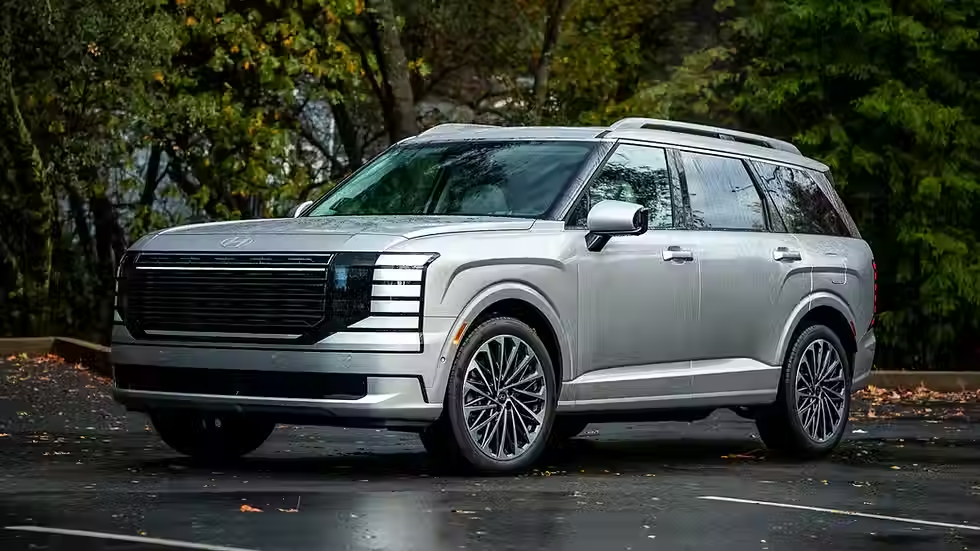
2026 Hyundai Palisade Calligraphy review by The Road Beat
Words and pictures: Mitchell Weitzman
As beautiful as the Palisade is on the inside, this may be an instance of Hyundai simply going too far. The real trouble with the Palisade has always been the Kia Telluride, its better-looking twin sister. Styling changes have made the new Palisade nearly unrecognizable compared to the 2020 original, and its attempt to channel Range Rover vibes has backfired with over-the-top vulgarity. The same sadly applies to the Telluride, albeit to a lesser extent somewhat luckily, which also further solidifies its lead as the preeminent choice of the twins. Yet what was once a clear class leader now feels oddly out of touch with reality.
While this review is for the V6-powered Palisade, a verdict on the all-new Hybrid model awaits evaluation.

Picks
On this top-spec Calligraphy model — a name that already fet TikTok-pretentious — Hyundai continues to succeed where it matters inside. Leather and soft-touch materials are everywhere you look and interact with. In particular, the light tan interior catches the eye and makes both drivers and passengers say, “wow.” Even if I don’t care for the exterior, the bold shape paired with the classy interior does make this SUV feel effortlessly expensive.
In today’s ultra-competitive three-row SUV segment — including the Toyota Highlander and Grand Highlander, Honda Pilot, and Mazda CX-90 — the Palisade now sits at the top for interior luxury and cabin quality. In fact, it may even edge out Mazda’s best effort.
At 199 inches long, the Palisade is impressively spacious in all three rows. The rear captain’s chairs offer power recline and legroom adjustment, and the cargo area features switches to electrically fold and raise both the second and third rows. No manual effort required — something even a $90,000 Volvo XC90 still demands.

Convenience and packaging continue to impress. USB ports are scattered throughout all rows for passengers (and kids glued to their phones), and the center console’s wireless charging tray is excellent. Maybe not hidden well enought, but its ubberized backing keeps your phone in place and even accommodates today’s oversized camera bumps. Why hide the phone placement when most just dump their phone in a cup holder anyways.
Road manners do a convincing job of a luxury machine, too. On the highway, there's minimal road and wind noise and a controlled and comfortable ride quality across nearly all normal road surfaces, even doing well on my own battered neighborhood street.
Nicks
Where the Palisade loses its once-commanding lead is in some very fundamental areas. A naturally aspirated V6 is always welcome, but in its default drive modes, the Palisade stumbles badly in everyday driving. It’s not that the engine lacks power; it’s the dreadful gearing from the eight-speed automatic. What happens way too often is that the transmission upshifts far too early, leaving the engine completely gutless down low.

For example, pulling onto a normal 45-mph road highlights this issue. It accelerates just fine and smoothly in first and into second, but then almost instantly after dumps you in third — landing you at just 1,300 rpm with no torque and no momentum. The car then trips over itself, downshifting again to recover if you get rightfully greedy with the throttle to compensate. That kind of blundering behavior is simply unacceptable.
Sport mode helps mask the problem, but then sport often makes the Palisade refuse to settle into top gear on the highway, making it an even bigger fuel hog. Which, by the way, the big V6 returned just 19 mpg in my testing — significantly worse than the turbocharged silken inline-six in a Mazda CX-90 and well below the Grand Highlander Hybrid MAX. Seriously, this engine and transmission pairing makes the Palisade feel like an absolute turd in the real world. Even at steady highway speeds, it constantly hunts between gears on mild inclines, unable to decide what it wants to do and what it needs.
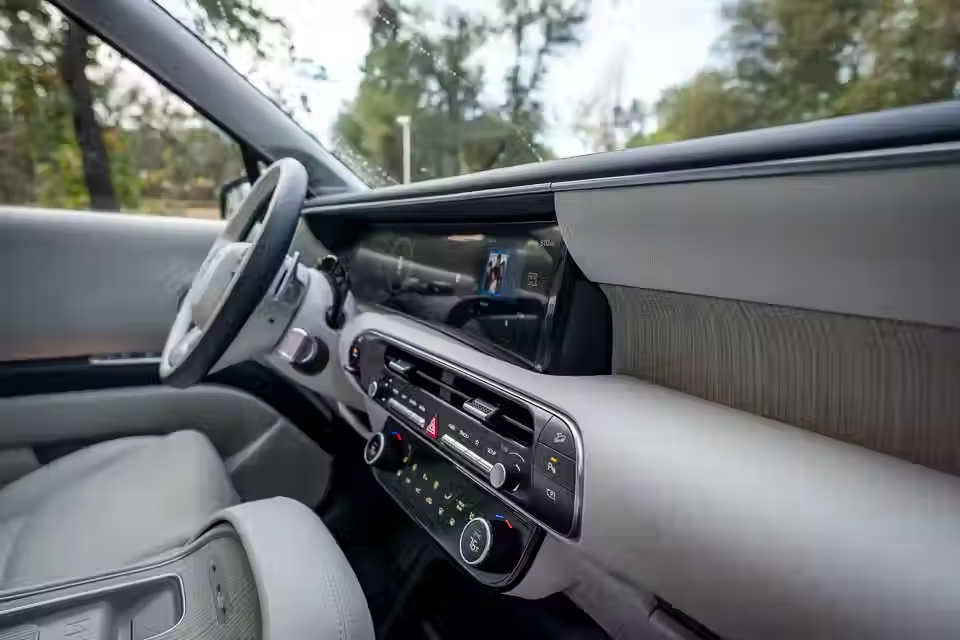
Despite the fancy seats with endless adjustments and a mild massage feature, I could never find a truly comfortable driving position. The relationship between leg and arm reach feels off, compounding the problem. Jumping into a Grand Highlander the same day, I dialed in a better and optimal driving position in about 15 seconds — something a full week with the Palisade couldn’t achieve.
Other ergonomic choices baffle, too, like the button to activate the (extremely helpful) top-view parking cameras being placed furthest right on the dashboard, near the passenger’s knee. Was it forgotten until the end of development? Meanwhile, the drive mode and terrain controls are small and obscured by the steering wheel, largely out of sight. All of these switches could have been logically placed near the wireless charging pad, where they’d be both visible and easy to reach.

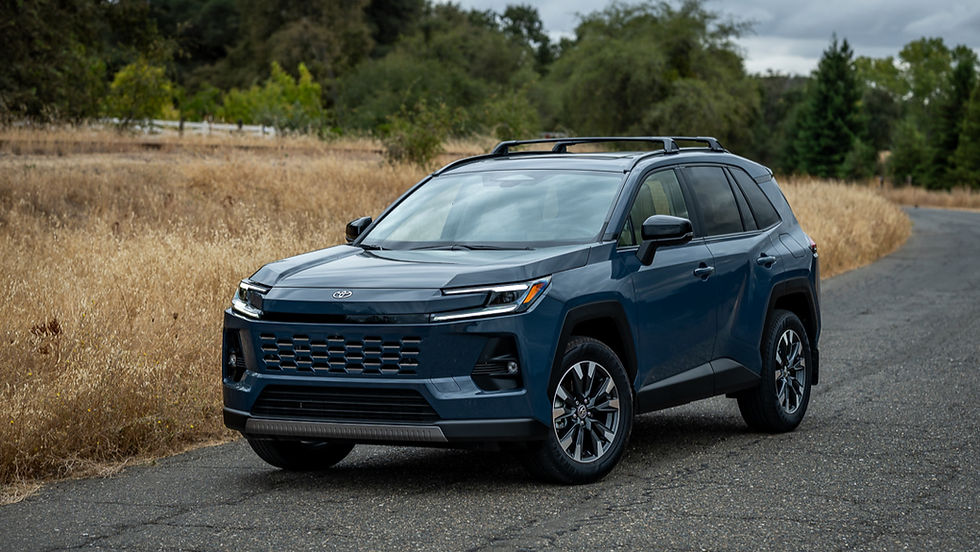
For a $60,000 SUV, proximity touch-sensing door locks are only located on the front doors. So, say your hands are full with groceries and you want to easily place them in the back seats, you'll have to open the driver’s door first, then hit the interior unlock button to access the rear and then open another door; Even a mid-trim RAV4 does better here with access to all doors. Or for those with kids, you also will not be able to open the rear doors for them without unlocking and opening the front first. Hyundai choosing to limit this feature to the front doors on such a big and expensive SUV is a cheap and frustrating decision.
I'm not done with the lock and unlock controls, though, because I had so many instances of placing my hand on the door handle where the mirrors would fold out, clearly indicating the car was wanting to unlock, but it actually wouldn't unlock. It instead would take a couple tries and this was frustrating on days it was raining. It's nearly 2025, this shouldn't be an issue, and I never have similar problems on any other cars it seems besides Hyundais, but this was the worst instance yet.

Worse still, the unlocking itself is unreliable. In many instances, I would repeatedly grab the handle to unlock and open, watch the mirrors unfold — a clear sign the car detected the key and my hand — only for the door to remain locked. It often took multiple attempts, which was especially aggravating in the rain. It’s nearly 2026, and this shouldn’t be an issue. I’ve noticed similar behavior in other Hyundais, but this was the worst instance yet. Perhaps the flaw is in the placement for where to touch to lock the door, which coincides with the same place you open the door from. Other manufactuers place the locking sensor at the front of the handle to avoid this problem.
The long combined instrument cluster and central display is a nice idea and works great in other Hyundais, but the way this design pulls and curves out away from the dashboard at the end is a strange design choice, especially when the rest of the dashboard is so flat. In other words, just too tacked-on and awkward.
And finally, the value argument has evaporated. At $60,000, this is a very expensive Hyundai.
There are better choices (and a hybrid option now)
The Palisade — along with the Telluride — reshaped the SUV landscape in 2020. But recent updates have been largely cosmetic, and they’ve gone too far into aesthetic excess. The engine frustrates in daily use, controls are poorly placed, the door locks are unreliable, and I never once felt truly comfortable behind the wheel. The once-strong value proposition is also gone. What remains to be seen is the new hybrid version of the Palisade which adds much needed power and extra efficiency. Could this be the game changer needed?
What really drove the point home in this particular instance and test was stepping straight into a Grand Highlander Hybrid MAX the same day. Instantly, the powertrain felt stronger in real-world driving, the seating was more comfortable, the controls were intuitive, and all four doors unlocked exactly as they should. It may not feel quite as luxurious inside, but it’s the better overall package — and likely the better choice for almost everyone. If the new Palisade Hybrid can compete with Toyota's or Mazda's powertrains, then I may have to eat my own words.
2026 Hyundai Palisade image gallery


2026 Hyundai Palisade Calligraphy specifications
As-tested price: ~$60,000
Engine & Drivetrain
Engine: 3.5L V6
Horsepower: 287 hp
Torque: 260 lb-ft
Transmission: 8-speed automatic
Drivetrain: All-wheel drive (AWD)
Dimensions
Length: ~199 inches
Wheelbase: ~117 inches
Width: ~78 inches
Height: ~70 inches
Interior & Capacity
Seating: 7 passengers (captain’s chairs standard)
Cargo volume: ~19 cubic feet (behind third row)
Cargo volume: ~46 cubic feet (behind second row)
Max cargo volume: ~87 cubic feet (with all rear seats folded)
Performance & Efficiency
Towing capacity: Up to ~5,000 lbs
Real world fuel economy: 19 MPG
Notable Features on Calligraphy
21-inch alloy wheels
Dual-pane panoramic sunroof
Nappa leather quilted seating
Heated and ventilated seats (multiple rows)
Surround-view camera and advanced driver aids
Remote smart parking assist
Premium audio system
Heads-up display



Comments