
2027 VW Atlas review: Gorgeous, but inventive thinking misses

Appreciate the thought, but it comes up short against rivals
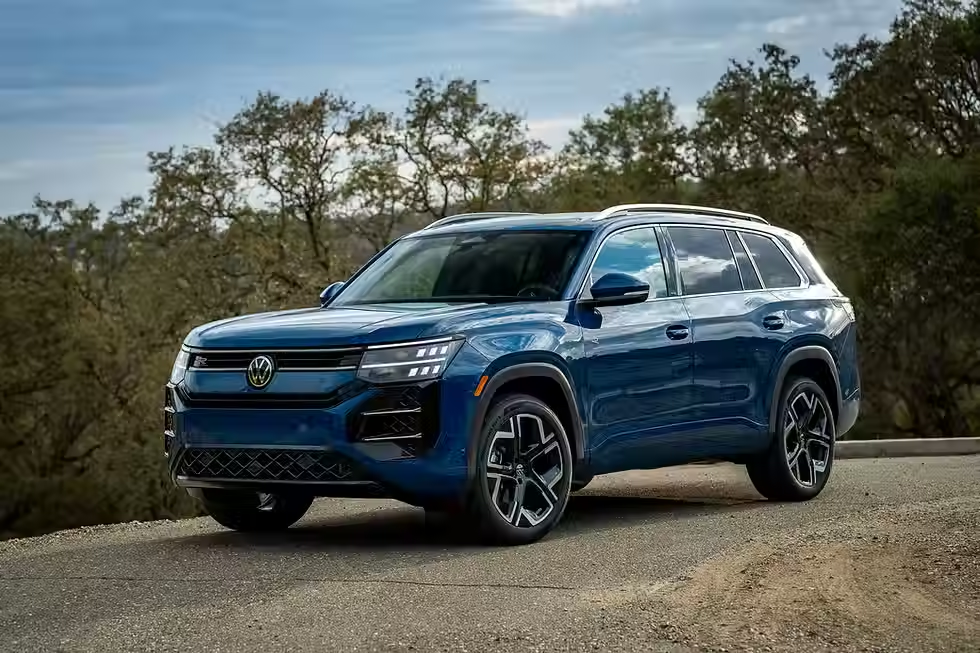
2027 VW Atlas review by The Road Beat
Words and pictures: Mitchell Weitzman
Going another year without a hybrid option, Volkswagen's biggest SUV doesn't have the ammunition to compete at the top of the pecking order against the brilliant Toyota Grand Highlander Hybrid or Kia Telluride Hybrid. Still, there are some interesting ideas here that keep the Atlas fresh for existing customers looking to upgrade. Being both thirsty and expensive as-tested, the real challenge might be preventing brand defectors.
Picks
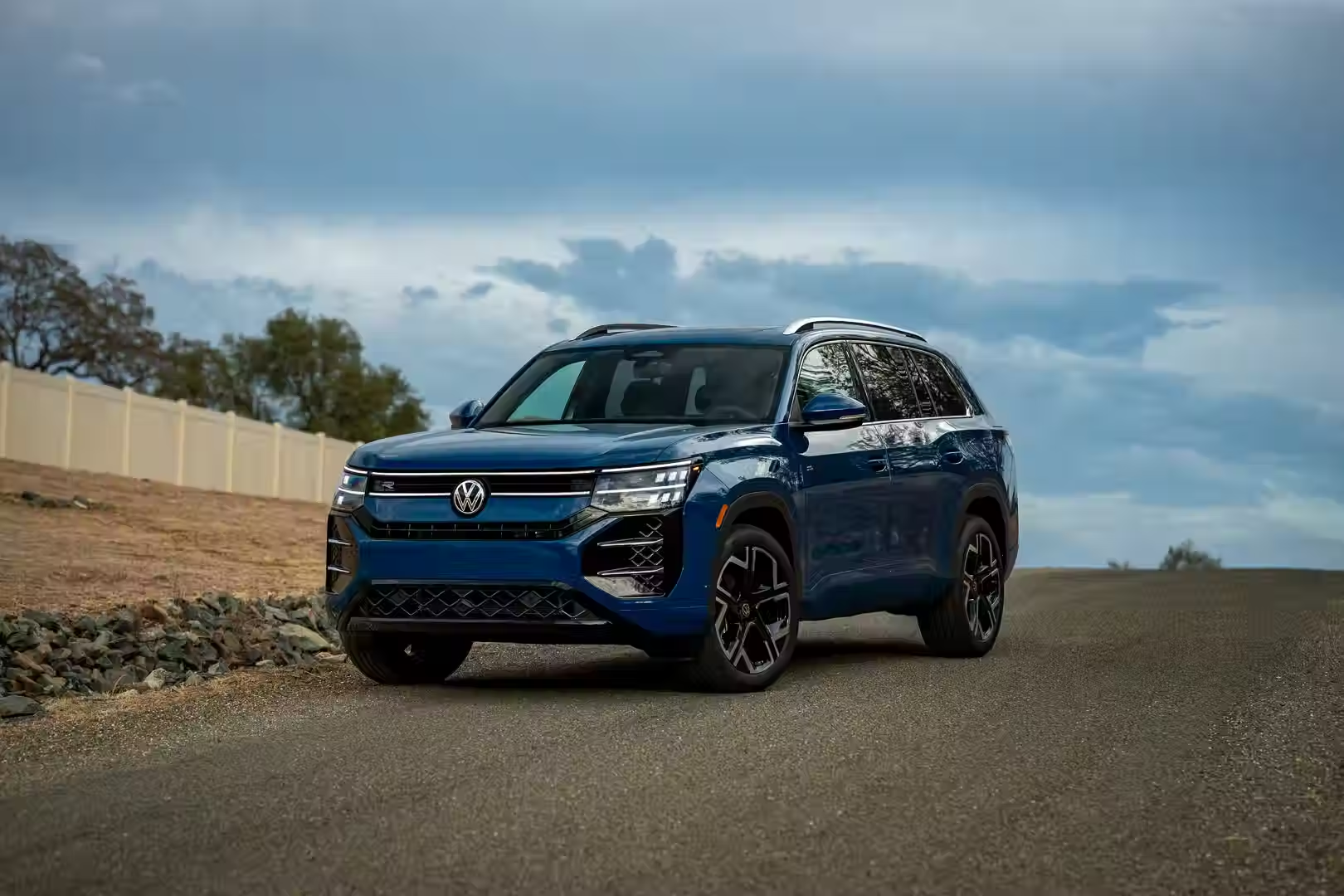
Large SUVs will always be inherently ungainly thanks to their sheer size and weight, yet the Atlas has long been one of the most handsome of the bunch. Rather than relying on over-the-top theatrics, the Atlas is a simple, curvaceous affair with strong, pronounced lines and a tidy front end featuring a relatively small grille opening compared to the monstrosities infecting so many modern cars. It looks properly upscale, too, and is easily among the best-looking in its class, especially against the overdone Hyundai Palisade and rather plain Grand Highlander. An example then of making understated work to its strength.
Another strength that thankfully remains is how the Atlas drives, because it steers and turns rather well. I recall a previous Atlas having steering effort that was too light, but the latest feels more natural and intuitive in all situations. There's even a little feel and information coming through the wheel, helping it avoid feeling completely deceased.

Volkswagen does a lot of platform sharing, and this has resulted in its various models sharing similar driving characteristics. Luckily, that's good news because they each drive pretty dang great when the roads get curvy. The Atlas is very competent indeed, with an eagerness to turn in sharply when needed, keeping great composure through a series of bends, and an ability to handle side-to-side transitions without wilting.
As far as big SUVs go, it's one of the most accomplished on a curvy road. It's equally well-suited to straight roads, too, because highway cruising is easy thanks to arrow-straight tracking and a comfortable, controlled ride across all the surfaces encountered. While not a driver's car, this is a big SUV that at least had effort put into how it behaves and I very much appreciate that.

Of course, it's big inside, too, with comfortable rear seats and a decent third row. Fold the last couple of seats down and you'll have 56 cubic feet of space to explore or fill with your thrift store finds. More relevant to those who actually need a third row is how easily the second row folds and collapses out of the way, making access to the back of the theater considerably easier. 21 cubic feet is permanently behind the third row when those seats are in use, which is highly usable for groceries and most daily drivel.
I do admire Volkswagen for trying new things inside the Atlas, and the outright quality and touchpoints have definitely improved, moving this top SEL Premium into a more upscale realm and closer to its competition. There's also a magnetic wireless phone charger, which is easily the best I've experienced in any new car, full stop.
Some passengers will enjoy the myriad combinations of ambient lighting onboard, as well as the very impressive seat massagers. The latter are a surprise to find in anything under $80K, let alone a vehicle that
doesn't even crack $60K.

It's not like this particular Atlas is a good deal at $58,431 all-in, but an AWD model does start at a rather reasonable $45K, offering the same core benefits of its size, space, and good driving characteristics without needing to spring for the range-topping trim and fancy flourishes. At its base price and anywhere under $50K, this is a highly compelling big SUV with great core talents.
Nicks
Reality can bite, and I still dream of an Atlas that's simply... better, especially with so much potential in how well it looks and drives.
The ambient lighting inside can be nice, but it's also easily excessive depending on the color chosen, simply because there's so much of it. Not just on the door panels, but even across the dashboard in front of the passenger. While driving, it can become a bit distracting, and there's a fine line between an upscale atmosphere and looking like a nightclub. It might be cool upon initial entry, but you may find yourself needing to immediately tone it down.

Then there are the interior door latches, which you pull upward to operate. However novel, they're difficult to grasp, and because they're positioned so far forward near the door hinges, it can be awkward to pull upward (and then hold up) while pushing the door open given the lack of leverage. It's a different way of thinking, but ultimately less satisfying and clunkier to use than conventional handles.
VW did add back actual buttons on the steering wheel, but left the sloppy sliding temperature and volume controls in the center of the dash. The main central display can be cumbersome to access and use at times, with so much dependency crammed into one space. The gauge cluster also takes time to master, thanks to the multitude of options and information available.
But the biggest problem with this big SUV is how much it likes to drink. Now, I enjoy sipping a good Scotch, but I've always been one to chug a Coors and other light lagers. And it's there that the Atlas likes to play its drinking games, with a penchant for burning through the common grade of gasoline.

After a week of my usual routes, including highway driving, backroads, and traffic lights, the 2027 Atlas still managed only 21 MPG overall, this despite having a relatively small turbocharged four-cylinder engine. There still isn't a hybrid option available like there is with either the Toyota Highlander and Grand Highlander, while Kia has now introduced a very competent Telluride Hybrid. All those competitors can achieve around 30 MPG overall quite easily, making the Atlas's nearly 50-percent fuel economy deficit a big deal. With gasoline costing over $4 and even $5 in some parts of the country, that's an increasingly expensive disadvantage.
It's also very expensive when all the options are ticked, with this range-topper costing $58,431. There's not exactly a value play here when comparing the top models. Honda has the Pilot, which costs about the same, also drives great, is easier to use inside, and returns similar fuel economy. Meanwhile, a Highlander Hybrid Limited comes in at roughly the same price while offering considerably better fuel economy. The Telluride Hybrid makes an equally compelling case at about the same price point, too.
This Atlas is a tale of two continents
On its right hand, the latest Atlas is easily an improved vehicle and a handsome one at that. But the user interface remains flawed and more difficult to learn and use than it should be. The smart additions are also matched by questionable choices. Still, at least Volkswagen took some chances and tried to be creative, even if not all of them proved wise.

For those already invested in previous generations of the Atlas, the new one shares enough of its familiar positives to make it a simple upgrade choice. But with no hybrid option and no clear arrival date for one, those shopping for a new Atlas could easily be tempted by the current crop of hybrid alternatives, especially when considering how much they might save each month on gas. What could have been a knockout Panzerschreck will have to wait a little while longer.
2027 Volkswagen Atlas SEL Premium R-Line 4MOTION — Specifications
Color: Mountain Lake Blue
As-Tested Price: $58,431
Engine: 2.0-liter turbocharged inline-four
Horsepower: 282 hp @ 5,500 rpm
Torque: 258 lb-ft @ 1,600 rpm
Transmission: 8-speed automatic
Drivetrain: 4MOTION all-wheel drive
Fuel Economy: 20 city / 27 highway / 23 combined MPG
Observed Fuel Economy: 21 MPG
Fuel Type: Regular unleaded
Fuel Capacity: 18.6 gallons
Towing Capacity: 5,000 lbs
Suspension: Independent front strut / independent rear multilink
Brakes: Four-wheel disc brakes
Wheels: 21-inch alloy wheels
Tires: 265/45R21
Dimensions
Wheelbase: 117 inches
Length: 201 inches
Width: 78 inches
Height: 70 inches
Curb Weight: About 4,600 lbs
Seating Capacity: 7 passengers (6 with optional second-row captain's chairs)
Passenger Volume: 154 cubic feet
Cargo Capacity: 21 cubic feet (behind third row), 56 cubic feet (behind second row), 97 cubic feet (maximum)
Warranty
Basic: 4 years / 50,000 miles
Powertrain: 4 years / 50,000 miles
Roadside Assistance: 3 years / 36,000 miles
Corrosion Perforation: 7 years / 100,000 miles
Scheduled Maintenance: 2 years / 20,000 miles
More photos of the 2027 VW Atlas SEL Premium R-Line




Comments